Customs Today
  • Home
  • Islamabad
  • Karachi
  • Lahore
  • National
  • Transfers and Postings
  • Chambers & Associations
  • Business
No Result
View All Result
Customs Today
  • Home
  • Islamabad
  • Karachi
  • Lahore
  • National
  • Transfers and Postings
  • Chambers & Associations
  • Business
No Result
View All Result
Customs Today
No Result
View All Result

Sri Lanka expects 5.5% growth in 2018

byCT Report
04/01/2018
in Uncategorized
Share on FacebookShare on Twitter

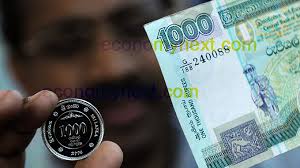
COLOMBO: Sri Lanka’s economic growth will rebound to 5.0 to 5.5 percent in 2018 from a below 4.0 percent in 2017 with more domestic and foreign private investment, Central Bank Governor Indrajit Coomaraswamy said.

Growth will have to be driven by domestic private investment and also larger flows of foreign direct investment coming from economic reforms of the government, he said presenting a road map for monetary policy during 2018.


You might also like

Pakistan returns to global markets with $500m Eurobond after four years

18/04/2026

Faisalabad Customs promotes EFS to boost efficiency: Collector Dr. Rizwan Basharat

18/04/2026

Private investors need a stable macro-economic environment with predictable policies to operate and invest, Coomaraswamy said.

The central bank through its tighter policies had brought stability to the economy, and the exchange rate, creating conditions for investors to act, but growth has taken a hit.

Sri Lanka’s growth will fall to a ‘shade below 4-pct” in 2017, Coomaraswamy said.

The economy was hit by a drought floods, and the usual hangover from a monetary backed fiscal overspending in 2015 and 2016 (a Keynesian stimulus), which generated a balance of payments crisis.

In 2015 the central bank cut interest rates in April, in the wake of a disastrous 2015 deficit budget, released over 300 billion rupees of liquidity and printed over 250 billion rupees more, triggering capital flight and credit bubble that naturally spilled over to imports and busted the currency.

Coomaraswamy tightened policy by raising rates and also engaging in some credit restrictions which were not market oriented.

The government also tightened fiscal policy, raising taxes in 2016. Government spending is generally less productive than private spending as it is ‘other people’s money’ which tends to reduce long term benefits.

Related Stories

Pakistan returns to global markets with $500m Eurobond after four years

byCT Report
18/04/2026

ISLAMABAD: Pakistan has re-entered the international financial market after a gap of four years by successfully issuing a $500 million...

Faisalabad Customs promotes EFS to boost efficiency: Collector Dr. Rizwan Basharat

byCT Report
18/04/2026

FAISALABAD: Officials from Pakistan Customs have urged exporters to fully utilise the Export Facilitation Scheme (EFS), highlighting that businesses at...

Aurangzeb advance economic diplomacy, engages global partners in Washington

byCT Report
18/04/2026

ISLAMABAD: Federal Minister for Finance and Revenue Senator Muhammad Aurangzeb, concluded final day of IMF-WB Spring Meetings in Washington. He...

FinMin meets AIIB president, discusses infrastructure financing, strategic engagement

byCT Report
18/04/2026

WASHINGTON: Federal Minister for Finance and Revenue, Senator Muhammad Aurangzeb, held a productive meeting with Ms. Zou Jiayi, President of...

Next Post

ASEAN & South Asia dyestuff for textile market to reach $1,938.9b by 2023

  • Terms and Conditions
  • Disclaimer

© 2011 Customs Today -World's first newspaper on customs. Customs Today.

No Result
View All Result
  • Transfers and Postings
  • Latest News
  • Karachi
  • Islamabad
  • Lahore
  • National
  • Chambers & Associations
  • Business
  • About Us

© 2011 Customs Today -World's first newspaper on customs. Customs Today.