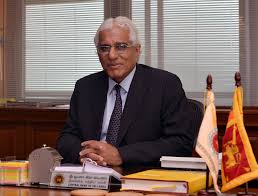
COLOMBO: Sri Lanka’s economic growth has to come from reforms and not deficit spending and money printing that creates high inflation and balance of payments crises, Central Bank Governor Indrajit Coomaraswamy said. In 2017, Sri Lanka is expected to grow a little under 4.0 percent which was disappointing, he said.
“The one thing that has to be avoided at all costs is to trying to boost the growth rate by loosening macro-economic policy in an inappropriate way,” Coomaraswamy said. “This is something we have done again and again in the past – arterially boosted growth through inappropriate fiscal and monetary policies and inevitably there is an overheating of the economy and usually both higher inflation and a balance of payments crisis.


“That is the repeating cycle of the Sri Lankan economy. And this time we are determined we would not go for the sugar high in terms of artificially boosting the growth rate through inappropriate macro -economic policy.”
In pegged exchange rate, when money printing by the central bank, which may or may not accommodate a budget deficit, generates higher economic activity and a balance of payments crisis with forex reserves being run down.
When rates are allowed to go up, and credit slows, the rebuilding of fore reserves after rate hikes reduces growth as credit and investment slows in a Keynesian hangover, though it can be moderated if capital inflows resume quickly.
Sri Lanka in 2017 also suffered from a drought in addition to the typical hangover from the Keynesian style stimulus of 2015 involving a budget going off the rails in 2015 and the central bank printing or releasing 630 billion rupees of liquidity to lose 4.0 billion US dollars of forex reserves.
The effects of a Keynesian hangover can be worsened if continued depreciation of the currency keeps inflation high killing disposable income. It can be mitigated if capital inflows resume fast.
A so-called revenue based reduction of the budget deficit will also slow growth, opposed to cutting spending and putting more money in the hands of ordinary people as state spending is less productive.
Meanwhile Governor Coomaraswamy said according to the central bank’s calculation the potential growth in the economy was about 5.75percent, and 4.0 percent growth indicated an output gap. We want to maintain some of the policies and drive the growth rate though reform,” he said. That is what has to be done. Not taking short cuts that cannot be sustained.”
Analysts says though the central bank has been sterilizing dollar purchases effectively keeping policy tight (quantity tightening). Though there has been no rate cuts per se, due to the wide policy corridor, overnight rates have moved down over 100 basis points towards the floor policy rate as credit slowed and liquidity built up from dollar purchases.
Governor Coomaraswamy said a modified inflation targeting regime aimed to give autonomy to the central bank so that it would no longer be pressured (fiscal dominance) to print money to fill the budget deficit (monetization).
“In the past there was fiscal dominance (of monetary policy),” he said. “The momentary policy much of the time accommodated fiscal profligacy.
“The central bank printed a lot of money, monetized the deficit. We trying to break away from that and have a forward-looking monetary policy.” Analysts say while It is true that there has been fiscal dominance, frequent BOP crises and high inflation is also coming from a too high inflation target and the targeting of core-inflation, despite having a managed exchange rate or peg. In the 2018 budget, the government has unveiled a series of reforms, after debacles in 2015 and 2016. Import duties are also being cut and fee trade deals are being signed.