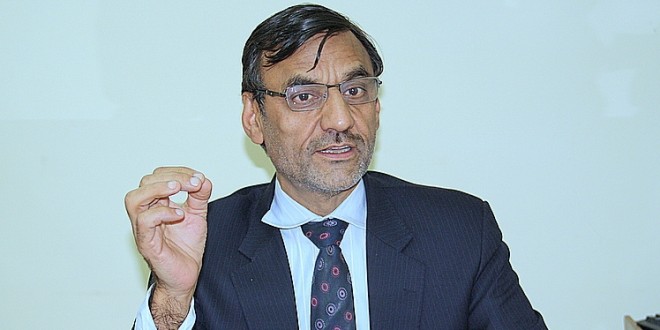
COLOMBO: Sri Lanka will charge newly proposed from April and September 2015 to bring down the budget deficit and stabilize the economy, Prime Minister Ranil Wickremesinghe said.
“Some of the new taxes will be implemented from April and others from September,” Prime Minister Wickremesinghe told parliament.


“There are in discussions. We are talking with the International Monetary Fund also mainly about it.”
Prime Minister Ranil Wickremesinghe said the government had to revise the budget to take into account a volatile global situation.
Even Britain had revised its budget this year, he said. If Britain exits the European Union there may be more problems.
Prime Minister Wickremesinghe said though there were complaints about capital gains taxes, even in London there was capital gains taxes.
The IMF is helping Sri Lanka write a new tax code. Sri Lanka has an old income tax law which has been amended countless times, and the President, like some medieval feudal state, is exempt from tax.
Sri Lanka’s elected ruling class, doctors and senior state workers are also given feudal style tax privileges.
Though the British ended both serfdom and slavery in first half of the 19th century, these tax privileges which makes serfs of ordinary citizens, were given after independence when the tax system went to the hands of the elected ruling class, which is now increasingly hereditary.
A cabinet paper presented by Wickremesinghe in early March proposed to suspend tax reductions in corporate income taxes outlined in a budget for 2016 for one year, hike value added taxes to 15 percent and charge capital gains taxes.
With the new measures the budget deficit is expected to be at 679 billion rupees (5.4 percent of gross domestic product), down from the planned 740 billion rupees (5.9 percent of GDP) and domestic borrowings brought down to
Nation building tax (which is cascading) will be kept at 2 percent (instead of the 4 percent proposed in the budget) and threshold will be brought down to 3.0 million from 3.75 million as proposed in the budget.
Domestic financing of the budget is expected to come down to 378 billion rupees. The 2016 budget proposed to borrow 557 billion rupees from domestic markets from 519 billion rupees in 2015.
Sri Lanka’s current economic woe began with an unsustainable ‘Keynesian stimulus’ in a revised 2015 budget, where some consumption taxes were cut, fuel prices were cut and state worker salaries raised by nearly 40 percent along with pensions.
The resulting deficit was financed partly by monetizing debt (printing money) which generated a balance of payments crisis.
Higher taxes will help the administration finance a sharp increase in salaries and pensions and reduce money printing in 2016.
Taxes are less harmful than currency depreciation in fixing budget.
Money printing and the attended currency depreciation pushes up the price of all goods imposing ‘belt tightening’ on all citizens, especially the poor through the back door. The rupee has already fallen from 131 to 145 the US dollar, during the past year.
Sri Lanka’s interest rates which were manipulated by the central bank with printed money generating a balance of payments crisis, have also started to move up, generating a correction in the credit system.
A rate cut in April is largely blamed for the current balance of payments pressure. Analysts warn that even with higher rates, if Treasury bill auctions fail and the central bank repays bill with printed money, pressure on the currency will remain, regardless of the interest rate.