Customs Today
  • Home
  • Islamabad
  • Karachi
  • Lahore
  • National
  • Transfers and Postings
  • Chambers & Associations
  • Business
No Result
View All Result
Customs Today
  • Home
  • Islamabad
  • Karachi
  • Lahore
  • National
  • Transfers and Postings
  • Chambers & Associations
  • Business
No Result
View All Result
Customs Today
No Result
View All Result
Home Science & Technology Science

Stanford engineers develop new air filter that could help in breathing

byCustoms Today Report
21/02/2015
in Science
Share on FacebookShare on Twitter

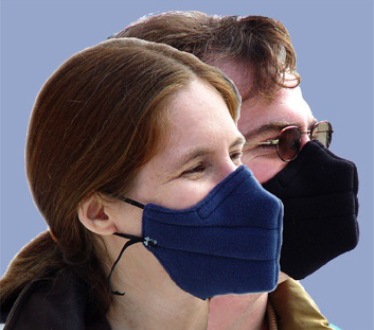
BEIJING: Stanford Univ.’s Yi Cui and his students have turned a material commonly used in surgical gloves into a low-cost, highly efficient air filter. It could be used to improve facemasks and window screens, and maybe even scrub the exhaust from power plants.

In the past few years, Cui has made several business trips to China. Each time he has found himself choked by smog produced by automobiles and coal power plants.


You might also like

Astronomers discover distant dwarf planet beyond Neptune

12/07/2016

Nasa’s Juno successfully begins orbit of Jupiter

05/07/2016

After a few of these trips, Cui, an associate professor of materials science and engineering at Stanford, came up with an idea to clean the pollution. He and his graduate students set to work designing an inexpensive, efficient air filter that could ease the breathing for people in polluted cities.”My lab group really likes to solve problems, even if it’s something we’ve never worked on,” Cui said. “We think we could use this material for personal masks, window shades and maybe automobiles and industrial waste. It works really well, and it might be a game-changer.”

The work is published in the current issue of the journal Nature Communications.

This was the first time Cui’s group had designed an air filter – Cui’s work with nanomaterials focuses primarily on battery technology – so he and his students didn’t immediately look to materials that have traditionally been used in air filters.

Instead, they looked for polymers that would have a strong attraction to the main components of smog, particularly particle matters that are smaller than 2.5 microns, known as PM2.5. These pose the greatest risk to the human respiratory system and overall health; current filtration systems that can remove them from the air are very energy-intensive.

It turned out that polyacrylonitrile (PAN), a material commonly used to make surgical gloves, met these requirements.


Related Stories

Astronomers discover distant dwarf planet beyond Neptune

byCT Report
12/07/2016

LONDON: A dwarf planet half the size of Britain has been found tumbling through space in the most distant reaches...

Nasa’s Juno successfully begins orbit of Jupiter

byCT Report
05/07/2016

MIAMI: Nasa's unmanned Juno spacecraft has begun orbiting Jupiter, a key triumph for a $1.1 billion mission that aims to...

Coal dust kills 23,000 per year in European countries

byCT Report
05/07/2016

PARIS: Lung-penetrating dust from coal-fired power plants in the European Union claims some 23,000 lives a year and racks up...

Helium shortage could be solved by new life-saving discovery

byCT Report
28/06/2016

LONDON: Scientists might finally have overcome a global shortage of helium – potentially saving millions of lives in the process....

Next Post

Du revenue exceeds Dh12b in 2014 with 13% YoY growth

  • Terms and Conditions
  • Disclaimer

© 2011 Customs Today -World's first newspaper on customs. Customs Today.

No Result
View All Result
  • Transfers and Postings
  • Latest News
  • Karachi
  • Islamabad
  • Lahore
  • National
  • Chambers & Associations
  • Business
  • About Us

© 2011 Customs Today -World's first newspaper on customs. Customs Today.