ISLAMABAD: The textile export industry has raised concerns over rising costs and policy constraints, warning that current conditions could lead to factory closures, job losses and reduced foreign exchange earnings.
Chairman of the Pakistan Apparel Forum Muhammad Jawed Bilwani said exporters are facing increasing pressure from higher electricity, gas and water tariffs, along with rising wages and overhead costs. He stated that these factors have significantly increased the cost of doing business, affecting the sector’s ability to compete globally.


He said frequent power outages and gas shortages are disrupting production schedules and increasing costs, particularly in value-added textile and apparel segments. These disruptions, he added, are affecting delivery timelines and reliability in international markets.
Bilwani noted that high interest rates and tight monetary policy have limited access to affordable financing, making working capital and expansion difficult, especially for small and medium-sized enterprises. He added that new entrants into export markets are declining, while existing exporters are exiting or shifting to non-export businesses.
Taxation and liquidity constraints were identified as major challenges, with exporters facing multiple taxes and delayed refunds. He said billions of rupees remain tied up with the government, affecting cash flow and financial stability.
Energy costs and supply reliability remain key concerns, as tariffs in Pakistan are higher than those in competing countries such as Bangladesh and Vietnam. Frequent outages and gas shortages continue to disrupt production and delivery schedules.
Bilwani said these factors have contributed to reduced industrial output, layoffs and partial or complete shutdowns of production units, as international buyers shift orders to more cost-competitive markets.
He added that exchange-rate volatility has created uncertainty, affecting pricing, contract negotiations and the cost of imported inputs. Despite being a cotton-producing country, Pakistan relies on imported cotton and synthetic fibres due to inconsistent domestic production, increasing exposure to global price changes.
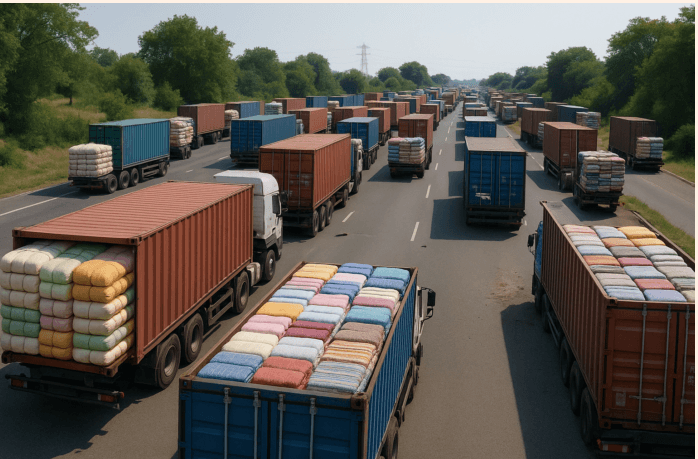
He also highlighted frequent changes in export-related policies, utility tariffs and taxes, along with the absence of a one-window system, which requires exporters to deal with multiple departments. Logistics and infrastructure issues, including high fuel costs, port congestion and inefficiencies in customs procedures, were also cited as constraints.
Bilwani said competing countries benefit from lower production costs, stable policies and broader trade agreements, attracting international buyers. Pakistan’s reliance on limited markets such as the European Union and the United States makes exports vulnerable to external demand shifts.
He warned that continued cost pressures and policy uncertainty could lead to deindustrialisation and long-term economic challenges. He called for measures to reduce production costs, ensure reliable energy supply and improve policy consistency to support the export sector.