Christopher Neal was formerly communications adviser to the World Bank’s energy global practice.
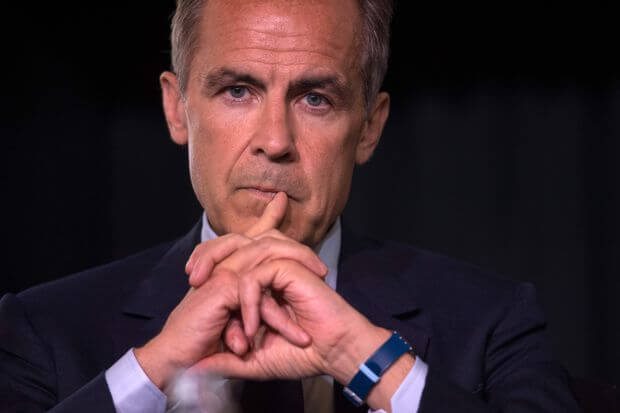
Mark Carney, recently tapped by United Nations Secretary-General Antonio Guterres to be UN Special Envoy for Climate Change, is no stranger to big challenges.

As the former governor of the Bank of Canada, he managed to shield the country from the worst impacts of the 2008 financial crisis. And as head of the Bank of England, he has adroitly managed financial risks that spiked over the Brexit imbroglio.
But his new task poses yet greater challenges. He will be persuader-in-chief for concerted action on the world’s most pressing and contentious problem: How to stop the planet from warming more than two degrees over its average preindustrial temperature.
He enters at a critical stage. The UN climate change conference in Madrid may deliver some progress with more countries pledging to achieve net-zero emissions by 2050, meaning that all man-made greenhouse gas emissions would be removed from the atmosphere through reduction measures. It may also achieve consensus on setting up a global carbon-offsets market. However, even if achieved, these are modest steps, far short of what is needed.
Progress is badly off track on targets set in the 2015 Paris Agreement. Global greenhouse gas emissions are rising rather than falling. U.S. President Donald Trump has shelved U.S. participation in global climate efforts; combined with the China trade war he triggered and an economic slowdown there, this has had the knock-on effect of stalling China’s efforts to cut its GHGs. In Canada, too, several premiers are trying to block a federal carbon-pricing policy as an affront to their provincial autonomy.
Such are the complications facing Mr. Carney. Still, few are better-equipped than him to deal with them. Arguably the world’s most respected central banker, he has established himself as a uniquely credible expert and catalyst in defining the economic and financial risks posed by climate change. In 2015, he laid the groundwork for the multilateral Task Force on Climate-related Financial Disclosures (TCFD), in which banks and insurers gather data to assess and price the risks posed to companies by climate change and how these companies are addressing these risks.
In his speeches to influential market players, he has already helped to shift the emphasis of climate discussions. He’s an economist and a banker, not given to Chicken Little-style alarmism. Unlike some activists, he does not emphasize calls for voluntary individual action or demand a root-and-branch rethink of capitalism to stem climate change.
Rather, he talks about the mounting financial risks facing companies, including those in the fossil-fuel industry, as the need for climate action grows more urgent. Oil, gas and coal companies, Mr. Carney warns, face the real and present danger that many of their resource finds and reserves will wind up as what he calls “stranded assets.” This concept emerges from the Paris accord’s two-degree ceiling on temperature rise; staying under it imposes a limit on emissions, creating a constrained “carbon budget.” Any resources whose extraction would put companies and countries over their carbon budget become “stranded;” that is, they stay in the ground, written off as investments that will never deliver a return to shareholders.
In a future world where governments take real climate action, the economic case for fossil fuels will grow dodgier. Companies that have staked their prospects on oil, coal and gas will find themselves in trouble as investors head for the exits. Despite efforts by Canadian petroleum companies to make oil extraction more “sustainable,” they face an inexorable reality that, in a decarbonized world, their “locked-in” high-carbon capital and infrastructure investments imply either a commitment to continued high carbon emissions, or early scrapping of those investments.
Markets and investors will price these risks. Already, analysts, ratings agencies, insurance and reinsurance companies, as well as banks, are sifting through reports of the TCFD to guide their decisions on investments, lending and risk management. Canada’s Expert Panel on Sustainable Finance, chaired by Mr. Carney’s erstwhile Bank of Canada deputy Tiff Macklem, called earlier this year on Canada to adopt the TCFD recommendations and map out the country’s long-term path to a low-emissions, climate-smart economy.
If Mr. Carney’s speeches and determination are a reliable guide, Canadians can expect a set of pragmatic but uncompromising messages from him. One hopes he can cut through the paralyzing stalemate between Canadians betting their future on expanded oil and natural-gas development, and those demanding more ambitious action on climate change.
Mr. Carney’s UN position will give him a global audience, but his stature and status as one of our own guarantees him an especially close hearing in Canada. This, along with his insider knowledge of financial markets, gives him an opportunity to help transform our stalled climate debate, at once putting on notice those who pretend that either business as usual or timid half-measures will pass muster as solutions.
He is in a position to make a forthright case for a far-sighted, planned transition away from fossil fuels, including a strategy to support laid-off Alberta oil-patch workers as they shift to new livelihoods.