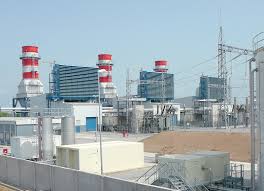
MUSCAT: Three major water desalination plants, which are under different stages of construction and have a combined water generation capacity of 731,000 cubic metres per day (equivalent to 161 million imperial gallons per day), will be able to meet the projected growth in demand for potable water in the country.
These projects, which will be commissioned in the next three years, are Qurayyat Desalination Plant, Barka IV Desalination Plant and Sohar III Desalination Plant. Qurayyat Desalination Plant, which is being developed by Qurayyat Desalination Company, will have a capacity to generate 200,000 cubic metres of water per day and is scheduled to start commercial operation in May 2017.


Likewise, Barka IV water project, which was awarded to Barka Desalination Company in November 2015, will have a contracted capacity of 281,000 cubic metres and plans to start commercial operation in May 2018, according to a seven-year outlook for power and water demand released by the Oman Power and Water Procurement Company (OPWP). Also, Sohar III Desalination Plant, awarded in November 2015 to Myah Gulf Desalination Company, has a contracted capacity of 250,000 cubic metres of water per day using reverse osmosis technology, with scheduled commercial operation to begin in May 2018.
Annual water demand in northern region (which include the interconnected zone and Sharqiyah zone) is projected to increase in the range of 5 per cent to 7 per cent for the next seven years – from 281 million cubic meters in 2015 to a range of 390-440 million cubic meters in 2022.
“In 2017, when the Qurayyat Desalination Plant begins operation, total available capacity is projected to meet the capacity target for both Public Authority for Electricity and Water (PAEW) demand scenarios. From 2018 to 2019, new capacity at Barka IV and Sohar III is sufficient to meet targets in both scenarios despite retirement of the old Ghubrah units,” said OPWP in its seven-year outlook report.
In 2020, a deficit emerges against the high case capacity target, although contracted capacity is sufficient to meet the base case capacity target until 2022. Apart from major projects, OPWP is developing a temporary water project in Qurayyat for two years, which is extendable for another four years.
Further, a mobile reverse osmosis plant that is currently located at Ghubrah, with capacity of 23,000 cubic metres per day and the WadiDayqah surface water reservoir, which is expected to provide capacity of 67,000 cubic metres per day beginning in 2019. “Mobile plants are considered as a temporary supply resource which can be removed or relocated once permanent supply becomes available.”
Considering the rapid growth in demand in recent years, OPWP and PAEW consider that the high case capacity target should be adopted with respect to plans for capacity additions. Transmission constraints between the Sohar, Barka, and Muscat demand zones also influence water supply planning. They comprise limitations in pipeline or pumping capacity that may constrain the flow of water from areas of capacity surplus to areas of deficit. PAEW has plans in place for transmission upgrades that will relieve these constraints over time.