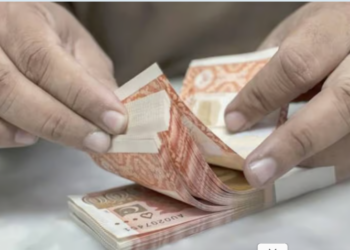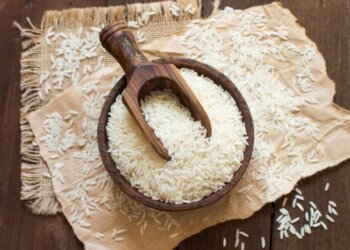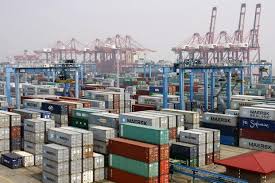
ISLAMABAD: Pakistan earned an additional $1.5 billion from exports sector during the first eight months of the current fiscal year as the government trade incentives succeeded in encouraging traders to boost exports, a ministry of commerce statement has said.
“The current year’s export performance has already contributed additional foreign exchange inflows of around $1.5 billion during the first eight months and is expected to reach the figure of additional $2.5 billion during 2017/18,” the statement added, with commerce ministry resuming the practice of releasing trade data.

Exports increased 16 percent in dollars terms and 22 percent in rupee terms in February over the same month a year earlier, which has so far been the highest monthly growth in the current fiscal year of 2017/18.
Exports amounted to $1.901 billion in February as compared to $1.638 billion in the corresponding month a year earlier, the ministry’s data showed.
“This increase in economic activity in external sector reflects an increase of 0.8 percent of GDP,” the commerce ministry’s statement said. “This means an additional around Rs280 billion of incomes for trade, industry, agricultural sectors and the resultant additional employment.”
Commerce ministry attributed the growth in exports sector to the export-friendly policies and incentives of the government and the renewed efforts towards seeking better market access by the ministry of commerce. “The positive trend in the international demand and exchange rate correction are also expected to help sustain this rising trend in the coming months,” it added.
In January 2017, government unveiled Prime Minister Trade Enhancement Initiative comprising a number of tax concessions and rebates for mainly textile sector, which accounts for more than 60 percent of total exports, to arrest decline in exports. It was expected to push exports by $2.5 billion. In December last year, rupee lost five percent of value against the US dollar that also improved competitiveness of export sector.
Widening rising trade deficit has become a headache for economic managers in the wake of stagnant exports and sharply rising imports in the recent years. Commerce ministry abandoned its practice of making trade statistics public few years back after witnessing decline in exports.
The imports of machinery and raw materials, essential for economic growth, contributed to the gap in the balance of trade.
“However, despite all these pressures, the increase in imports has been only 9.7 percent during February 2018 as compared to February 2017, bringing down the trade deficit by 21 percent from $3,636 million in January 2018 to $2,895 million in February,” the statement said.
Imports amounted to $4.796 billion in February as compared to $4.419 billion in the same month last year, the ministry data showed.
Imports have responded to the steps taken by the government to check surge in inflows of consumer goods for the past couple of years.
“The imposition of regulatory duties on 355 non-essential consumer items by ECC (Economic Coordination Committee of the cabinet) on the proposal by ministry of commerce resulted in reduction in the imports of these goods by 16 percent, while the FBR (Federal Board of Revenue) revenue registered an increase,” the commerce ministry statement added.
“However, since the large chunk of imports comprise of essential goods such as fuels and edible oil, which has been affected by the rising trend since July 2017, the impact of the reduced imports of non-essentials is being offset.”