Customs Today
  • Home
  • Islamabad
  • Karachi
  • Lahore
  • National
  • Transfers and Postings
  • Chambers & Associations
  • Business
No Result
View All Result
Customs Today
  • Home
  • Islamabad
  • Karachi
  • Lahore
  • National
  • Transfers and Postings
  • Chambers & Associations
  • Business
No Result
View All Result
Customs Today
No Result
View All Result
Home International Customs Vietnam

Vietnamese consumers open to buying electric vehicles

byCT Report
26/02/2018
in Vietnam
Share on FacebookShare on Twitter

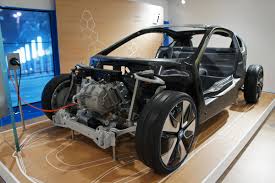
HANOI: Vietnamese buyers are open to considering an electric vehicle (EV) as their next car, demonstrating the country’s strong potential to speed up the electrification of automobiles.
The information was revealed in a Nissan-commissioned study titled “Future of Electric Vehicles in Southeast Asia” by Frost & Sullivan, a global growth consulting company.

The study was commissioned by Nissan and based on 1,800 online customer responses and face-to-face discussions across six countries in ASEAN, including Singapore, Indonesia, Thailand, Malaysia, Vietnam and the Philippines.
The survey’s results showed that one in three Southeast Asian consumers planning to buy a car was open to purchasing an EV.


You might also like

Large-cap firms report at least VNĐ3 trillion in 2019 pre-tax profit

03/02/2020

Oil firm bags nearly $4.4 billion in 2019

30/01/2020

Across the region, two out of three consumers identified safety standards as the most important factor in purchasing an EV. Charging convenience was identified as the second-most important factor. Contrary to common perception, cost was not a deterrent—in fact, customers surveyed were willing to pay more to own an EV compared to a conventional car.

The study, however, showed that lower costs would prompt more people to consider electric cars. Three in four respondents said they were ready to switch to EVs if taxes were waived.
Other incentives that would persuade consumers to buy an EV include the installation of charging stations in apartment buildings (70 percent), priority lanes for EVs (56 percent) and free parking (53 percent).

Trudy Harris, product communications manager at Nissan Motor Corporation in the Asia Pacific region, told online newspaper Zing.vn that the success of EVs depended on the cooperation between governments, businesses and other stakeholders. And cooperation does not only includes infrastructure, but also tax incentives and support for users to develop EVs in Asia in general and Vietnam in particular.

Related Stories

Large-cap firms report at least VNĐ3 trillion in 2019 pre-tax profit

byadmin
03/02/2020

HÀ NỘI: Most large-cap firms have released full-year earnings reports for 2019 with 29 companies reporting a pre-tax profit of...

Oil firm bags nearly $4.4 billion in 2019

byadmin
30/01/2020

HÀ NỘI: The Bình Sơn Refining and Petrochemical JSC (BSR), a subsidiary of the Việt Nam Oil and Gas Group...

Vietnamese currency under bigger pressure in 2020

byadmin
21/01/2020

HÀ NỘI After being relatively stable last year, the foreign exchange rate of the Vietnamese đồng against the US dollar...

Labourers work at export garment Maxport factory in Hanoi, Vietnam March 20, 2019. Picture taken March 20, 2019. REUTERS/Kham - RC1EE193DCC0

US-China Trade War Seen as Boosting Vietnam Growth

byadmin
14/01/2020

Vietnam will enjoy the fastest economic growth in Southeast Asia in 2020, according to a new forecast from British multinational...

Next Post

Ukraine EU should harmonize tax customs legislation as soon as possible

  • Terms and Conditions
  • Disclaimer

© 2011 Customs Today -World's first newspaper on customs. Customs Today.

No Result
View All Result
  • Transfers and Postings
  • Latest News
  • Karachi
  • Islamabad
  • Lahore
  • National
  • Chambers & Associations
  • Business
  • About Us

© 2011 Customs Today -World's first newspaper on customs. Customs Today.