ISLAMABAD: Pakistan is facing renewed scrutiny over its reliance on global payment networks, with policymakers highlighting that Visa and Mastercard reportedly cost the country around $250 million annually despite transactions being in local currency.
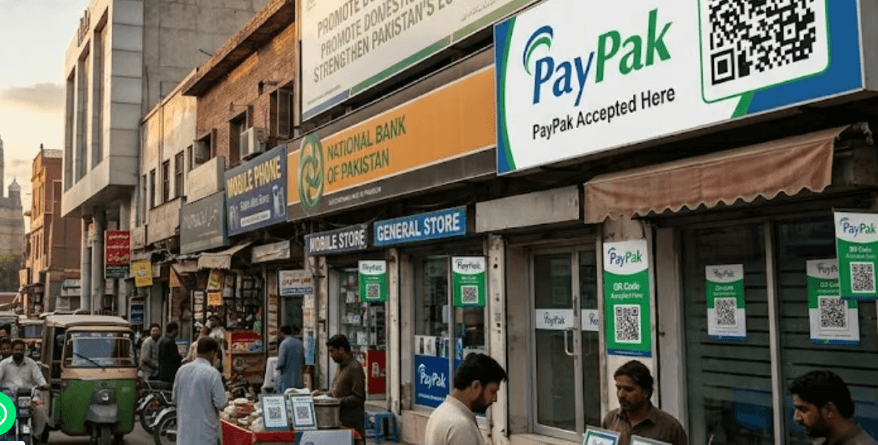
As the government pushes to expand digital payments and move toward cashless economy, greater focus is being placed on promoting domestic alternatives like PayPak and QR-based systems, framing the issue as a broader effort to reduce costs and strengthen local financial infrastructure.

The issue was prominently raised during meeting of Senate Standing Committee on Finance, where Pakistan’s entire payment ecosystem was put under the spotlight.Saleem Mandviwalla strongly pushed for aggressive promotion of local PayPak card, saying its usage increased following the committee’s intervention. However, he stressed that global payment giants still dominate everyday transactions across the country.
Mandviwalla revealed striking concern, Visa and Mastercard operations in Pakistan require dollar-based settlements, leading to an estimated $250 million in annual payments to these companies, even though all transactions are conducted in Pakistani rupees. He further pointed out that banks remain hesitant to fully support alternatives outside these dominant global networks.
He noted that around 90 million Visa and Mastercard cards are currently in circulation in Pakistan, while PayPak cards have still not crossed 5 million users, underscoring the overwhelming dominance of international players.
The government is attempting to push the country toward a more cashless and digitized economy. Bilal Azhar Kayani informed the committee that a dedicated body has been formed under the prime minister to accelerate digital transformation, improve financial documentation, and promote electronic payments across the system.
He also highlighted rapid infrastructure growth, revealing that digital point-of-sale terminals have surged from 500,000 to 1.3 million, signaling a major expansion in digital payment acceptance nationwide.
Authorities are actively promoting PayPak alongside QR-code based payment systems, positioning them as cheaper and more accessible alternatives for consumers and merchants.
Dr. Inayat Hussain added that PayPak has now captured around 24% market share, emphasizing that digital payment systems represent a stronger and more sustainable long-term direction compared to traditional card-based models.