ISLAMABAD: In the wake of slapping ban by the government on recruitment of fresh jobs, the Federal Board of Revenue (FBR) has been facing severe constraints of human resource and this difficulty will aggravate with passage of time if remedial measures are not taken well on time.
Total numerical strength of the tax collection machinery is 23,000 and mid carrier staff below grade 17 is reducing at accelerated pace as most of the staff is rapidly approaching the age of retirement.


After witnessing acute shortages of human resource, the FBR has made special presentation to Finance Minister Ishaq Dar last month for seeking waiver on fresh recruitment into the tax collection machinery by treating it as special case.
During their presentation to the Finance Minister, the FBR has informed that around 5000 to 7000 employees are going to be retired from the Board in the near future, so the human resource gap is going to widen.
In last few months, all proposals of the FBR for hiring new workforce were rejected by the government. FBR Member Customs Nisar Muhammad had proposed Customs Border Force (CBF).
In order to overcome menace of smuggling to be around $2.5 billion estimated by USAID, the FBR had proposed the establishment of CBF and creation of 10,000 posts in phases.
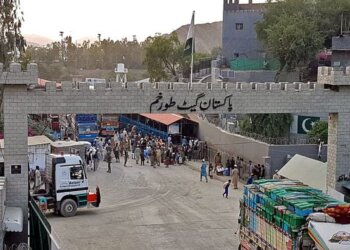
The existing workforce posted at borders to control smuggling comprises just 124 sepoys with most of them being above 55 years of age.
Referring to a recent report by the World Bank, the country lost approximately $35 billion between 2001 and 2009 on account of smuggling under the guise of Afghan transit trade alone.
The FBR has proposed to Prime Minister three structures including Customs Border Patrolling Posts (CBPPs), Range and Regional Offices, CBF to monitor and curb smuggling in Khyber Pakhtunkhwa, Quetta, Gwadar and Karachi and establishing CBF headquarters in Islamabad headed by a director general of BS-21.
But this proposal was rejected by the government. Now after the visit of the Finance Minister Ishaq Dar and assurances given by him, the Chairman FBR has forwarded a summary to the PM Nawaz Sharif for removing ban on jobs especially in the context of pressing requirement in the FBR. The FBR has prepared a concept paper and presented it to the high-ups of the government.
Top officials also referred to another study undertaken by USAID, which found that every year $2.5 billion goods are being smuggled back into Pakistan via the Afghan transit trade.
According to the FBR concept paper, the main enforcement unit will be the Customs Border Patrolling Posts (CBPP), which will be responsible for patrolling enforcement against smuggling of narcotics, chemical precursors, explosive precursors, contraband items, raw material and general merchandise from the neighbouring countries and sea into Pakistan.
Patrolling posts will be created after every 50-60 km in the areas alongside the borders of Afghanistan and Iran and along the coastal belt of Pakistan. Four to five CBPPs would be monitored by the Range Office headed by an officer not below deputy director and these offices will be located in a city or town that is strategically important to control smuggling.
Now there is need to allow permission to the FBR to hire services of technically equipped workforce to broaden its narrowed tax base as the government intended to increase tax-to-GDP ratio by 5 percent in next five years, bringing it up to 14 percent from existing below 9 percent. Without improving its workforce, the dream of increasing tax-to-GDP ratio cannot be materialized.