DUBLIN:The European Union is fast-tracking a $1.1bn power interconnection project between Ireland and France as part of an overall effort to improve the bloc’s security of supply.
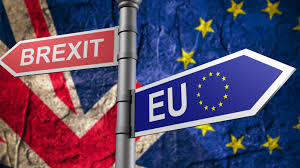
The Celtic Interconnector is one of 173 priority energy projects being overseen by Brussels, and is especially important to Irish energy security, enabling better linkage with the European mainland, in advance ofBrexit.

As a European Union member Ireland will be unable to form a bilateral deal with the UK after British exit from the EU.
The 700 MW subsea link is set to be completed by 2025 and will involve development by Eirgrid on the Irish side and RTE on the French side.
The projects will be entitled to accelerated planning permission as well as EU funding. The list includes twice as many electricity as gas projects, an EU source said
Brexit has cast doubt on the security of the gas that Ireland imports from Britain, and has, until now, had no direct power links with the continent, leaving it vulnerable to unlikely but potentially disastrous political or geographic events if the UK were to stop gas or oil supplies.
“Only a fully interconnected market will improve Europe’s security of supply and give consumers more choice,” Miguel Arias Cañete, the climate commissioner, said yesterday. “As highways do not stop at national borders, neither should pipes and cables.”
In terms of the full project list the commission is motivated to improve power and gas connections across EU member states. It also reflects concerns over dependence on Russia, which supplies about a third of the EU’s oil and gas, and how to make the best use of the greater share of power coming from wind and solar energy.
To address grid bottlenecks in Germany that have spilt into neighbouring member states, the EU is also promoting the Sudlinkproject between the north and south of its biggest economy. Also listed are a new subsea cable to spread wind energy generated in Denmark and a new electricity link through the Bay of Biscay to nearly double the interconnection capacity between Spain and France, seen as another way of encouraging investment in renewables.
Many of the projects are in central and south-eastern Europe, where dependency on Russian energy exports is most marked. In addition to gas links, the EU is pushing to reach a deal to decouple the three Baltic states’ electricity grids from Russia.
In terms of the Celtic Interconnector, the European Commission has invested €3.9m to date in the project and up to €4m was approved in early 2017 for ongoing and future studies.