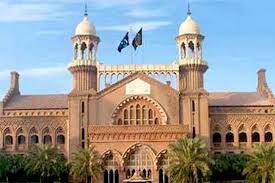
LAHORE: The Lahore High Court (LHC) has said that the Commissioners Inland Revenue have independent powers to select cases for audit under section 177 of the Income Tax Ordinance, 2001 in addition to selection by Federal Board of Revenue (FBR) through computer ballot under section 214C.
Commissioners Inland Revenue’s powers to select cases for audit under section 177 of the Income Tax Ordinance, 2001 have been upheld by a Division Bench of Lahore High Court (LHC). The LHC judgment has decided two sets of appeals filed respectively against two judgments delivered by different learned Single Benches of this Court. Common question of Commissioner’s powers to select for audit, after the addition of explanation to section 177 and 214C of the Ordinance, 2001 by Finance Act, 2013.

It is further learnt that Division Bench of the LHC has dismissed appeals filed by the taxpayers and accepted the stance of Federal Board of Revenue by confirming the judgment in Kohinoor Sugar Mills’ Case, being in consonance with legislative declaration and clarification under the Explanations inserted in the Ordinance of 2001, through Finance Act 2013, is upheld.
The background facts that earlier a single bench of LHC on writ petition filed by Chenone Store etc against notices issued by the Commissioner selecting their cases for audit under section 177 had held that Commissioner has no independent power to select cases for audit. In judgment notices of selection for audit, issued, after amendments through Finance Act 2010, by Commissioner under Section 177 of the Income Tax Ordinance 2001 (“Ordinance of 2001”); Section 25 of the Sales Tax Act 1990 (“Act of 1990”) and Section 46 of the Federal Excise Act 2005 (“Act of 2005”), were declared illegal and without lawful authority, after striking down first proviso to the Section 177 (1).
Whereas another single bench on the petition of Kohinoor Sugar Mill etc had given a contradictory ruling that Commissioner has independent power to select taxpayer’s cases for audit by recording reasons for doing so. This judgement had also dealt with validity of notice of selection for audit, issued by Commissioner under Section 177, after amendments through Finance Act 2010. The Explanations inserted, during proceedings, through Finance Act 2013, were treated to have retrospective effect, therefore, the selection by Commissioner was held to be in accordance with law.
Both the judgments of single bench were at variance. Hence both department as well as taxpayers had filed ICA appeal before the Division Bench of LHC who has released its judgement by accepting the departmental version and over ruling the Chenone Store judgement.
The operative of the judgement revealed that nevertheless, we are in agreement with the observation in Chenone Stores’ judgment that ‘Even though the Commissioner may be the best person in the system to identify a tax default, he cannot enjoy unguided discretion’. It has already been declared in Media Network’s Case that Commissioner shall give criteria/reason-ns in the notice for selection. Following the laid down law, first proviso to the Section 177(1) requires that reasons shall be given by the Commissioner before calling the record for audit.
It said that yet in our opinion, his discretion to call for record to conduct audit need to be structured for avoiding its potential misuse. This discretion should not be used to call a taxpayer consecutively to meet budgetary targets of collecting tax. In subsection (7) of the Section 177, though the legislature has authorized audit of a taxpayer in the next and following tax years but only where there are reasonable grounds for doing so. These reasonable grounds need to be confronted, in addition to the reasons for selection required under the first proviso. Commissioner can call for last six years record for audit, as is deducible from the second proviso, therefore, collective reading would show that the Legislature deprecates, as a rule, selection or calling for record of a taxpayer every year. “