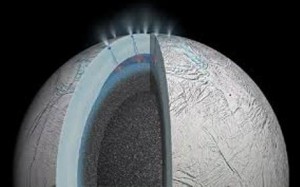


HONG KONG: Scientists have unveiled the pH of water spewing from a geyser-like plume on Saturn’s moon Enceladus, a discovery that suggests it is a promising candidate to harbour life.
The finding from a team including Carnegie Mellon University’s Christopher Glein is an important step towards determining whether life could exist, or could have previously existed, on the planet’s sixth-largest moon.
Enceladus is geologically active and thought to have a liquid water ocean beneath its icy surface.
The hidden ocean is the presumed source of the plume of water vapour and ice that the Cassini spacecraft has observed venting from the moon’s south polar region.
The team developed a new chemical model based on mass spectrometry data of ice grains and gases in Enceladus’ plume gathered by Cassini, in order to determine the pH of Enceladus’ ocean.
The pH tells us how acidic or basic the water is. It is a fundamental parameter to understanding geochemical processes inside the moon that are considered important in determining Enceladus’ potential for acquiring and hosting life.
The model shows that the plume, and by inference the ocean, is salty with an alkaline pH of about 11 or 12, which is similar to that of glass-cleaning solutions of ammonia.

LPG prices may drop by Rs30-40 as Iranian supplies resume
KARACHI: Liquefied petroleum gas (LPG) prices in Pakistan could fall by up to Rs30 to 40 per kilogram within the...