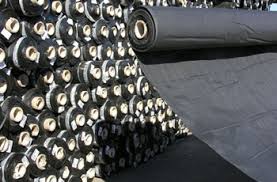
RIYADH: While the planet is home to all of us, Bonar Natpet can arguably claim a larger share of the pie. The company’s non-woven product is, quite literally, the fabric at the heart of the GCC’s construction boom, whenever and wherever civil construction interphases with soil.
The company has established itself as a frontrunner in providing non-woven geotextiles for countless projects across the region, especially in Saudi Arabia. More significantly, Bonar Natpet’s evolution over the years in the GCC also tells the story of how the regional construction sector has grown in the last decade.


In 2012, following the formation of a joint venture, Bonar Natpet built a fibre extrusion plant and a non-woven geotextile production facility, with an annual capacity of 20,000 metric tons (MT), of finished product in Yanbu Industrial City.
Blair Rawes, the global marketing director for Bonar’s civil department, tells Construction Week about the motivators that led the company to set up shop in the Kingdom.
“The reason we set up a plant [via our joint venture] in Saudi Arabia is that the GCC market for geo-synthetics is growing at a rate of 20% per year, and the Kingdom represents 70% of the geotextile market in the GCC,” he says.
“Growth in the geo-synthetics market is faster than that of the construction industry itself, because the use of geotextiles is increasing by the replacement of traditional work methods.” Bonar Natpet’s most popular geotextile is its non-woven grade, which is applicable for waterfront developments, erosion control, marine works, storm water drainage pipes, landfills, roads, airport runways, and metro systems alike.
Nonwoven polypropylene fabric is known for its strength, filtration, and separation qualities. It therefore acts as a site safety system, and is known for its ability to protect coastlines and avoid construction structures from mixing with soils.
All these facets help the project deliver solid structural performance, and nonwoven geotextile has become a fundamental component in modern construction projects. Woven geotextiles are made from polypropylene as well, but its manufacturing process, characteristics, and applications dramatically differ from those of nonwovens.