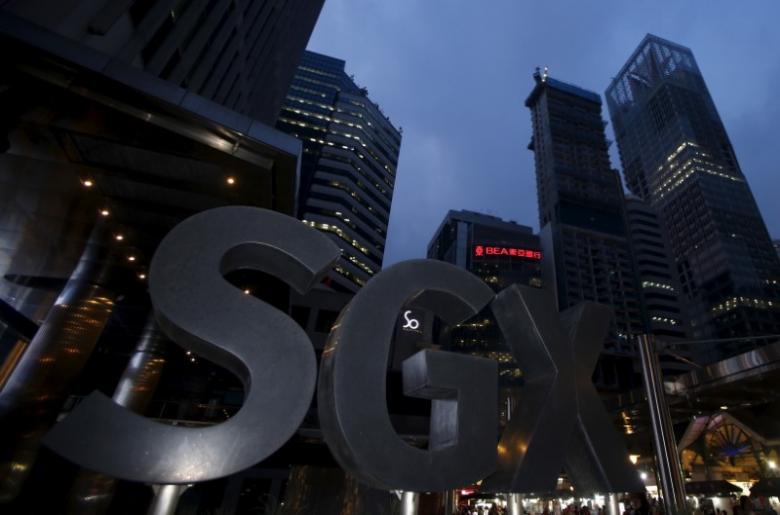
SINGAPORE: Singapore Exchange Ltd said it confronts challenges from moderating Asian economies subsequent to detailing a 5 for every penny ascend in second quarter benefit, and will seek after more IPOs by focusing on key parts, for example, innovation and land.
“While market sentiment has improved, uncertainty around future US policies and slowing Asian economies will influence trading activity going forward,” Chief Executive Officer Loh Boon Chye said.


The trade detailed a net benefit of S$88.3 million (US$62 million) in October-December, beating the normal gauge of S$85.9 million from four examiners and up from S$83.7 million in a similar period a year prior.
The bourse has taken measures to shore up market liquidity, enhance the nature of postings and fortify its administrative structure after a penny stocks crash in 2013 battered speculator certainty, yet confronts an extreme errand to enhance exchanging action.
Second quarter revenue rose 3 percent to S$199.6 million.
“Our results this past quarter reflect higher levels of market activities compared to a year ago as the conclusion of the US presidential election and clarity on interest rates environment brought participants back to the market,” said Loh.
SGX has developed into an Asian hub for listings of real estate investment trusts, which typically pay out strong dividends, but has struggled to attract large IPOs while poor valuations have also led to a number of delistings over the past few years.
“We just need momentum in terms of IPOs coming through and then you have got to pick your sector strengths in the context of the economic outlook,” Loh told Reuters.
Loh said SGX was targeting technology, infrastructure and real estate companies and some consumer firms aimed to have a market valuation of over a billion Singapore dollars.
Fundraising in Singapore via IPOs recovered to US$1.7 billion last year, Thomson Reuters data showed, after slumping in 2015 to its lowest since 1998.
Lo, a former banker took over as CEO in 2015 and last year the bourse outlined plans to allow listing of dual class share structures, but some investors have criticized the move as these typically give one set of shareholders greater voting rights than others.
“If Singapore as a country is keen to position itself as a hub for tech, biotech and fintech, the thinking must surely be that once you attract all these fintech companies to Singapore, you should provide a platform for them to list,” said David Smith, head of corporate governance at Aberdeen Asset Management, which has criticized SGX’s proposals.
SGX lost out on the IPO of Manchester United to New York in 2012 because the soccer club owner could not obtain approval for a dual class share structure. The Singapore government then amended its laws to allow such structures.
A bigger rival Hong Kong Exchanges and Clearing (HKEX) surprised markets by outlining a proposal to launch a third board that would potentially allow firms to have different shareholder structures, such as weighted voting rights, as part of a broader effort to boost listings.
HKEX’s CEO Charles Li told the media in Hong Kong that the bourse was home to too many mainland Chinese, small caps, and financial and property companies, and had to find a way to attract new issuers particularly so-called “new economy” companies.